Process
How we make games.
We're a very small studio. This page covers how we finish games anyway, what the machines do and don't do, and how we tell you about it.
The five steps
-
Write it down
The game starts as text: premise, places, people, and a written brief for every image, track and sound it needs.
Person -
Draft
Models on our own workstation read each brief and produce candidates, in the game's style.
Model -
Choose
A person keeps what fits the game and sends the rest back with a better brief.
Person -
Build
The game is assembled in the engine. The code is written with an AI assistant, directed and reviewed by a person.
Person + model -
Ship
Play it, fix it, play it again. Decide it's done. Release it.
Person
On our machine
The models run here, not in someone else's cloud.
About a dozen open-weight models do the drafting: images, 3D shapes, rigging, music, sound effects, and clean-up jobs like cutting out backgrounds and upscaling. They all run on one workstation in the studio.
Running them ourselves means three things. A game's look stays consistent because the same setup draws every piece. Nothing is billed per image. And the work stays with us.
The limits
What the machines don't do.
This is the part most studios leave out. It's also the part that decides whether a game is any good.
-
01
They don't know what's good.
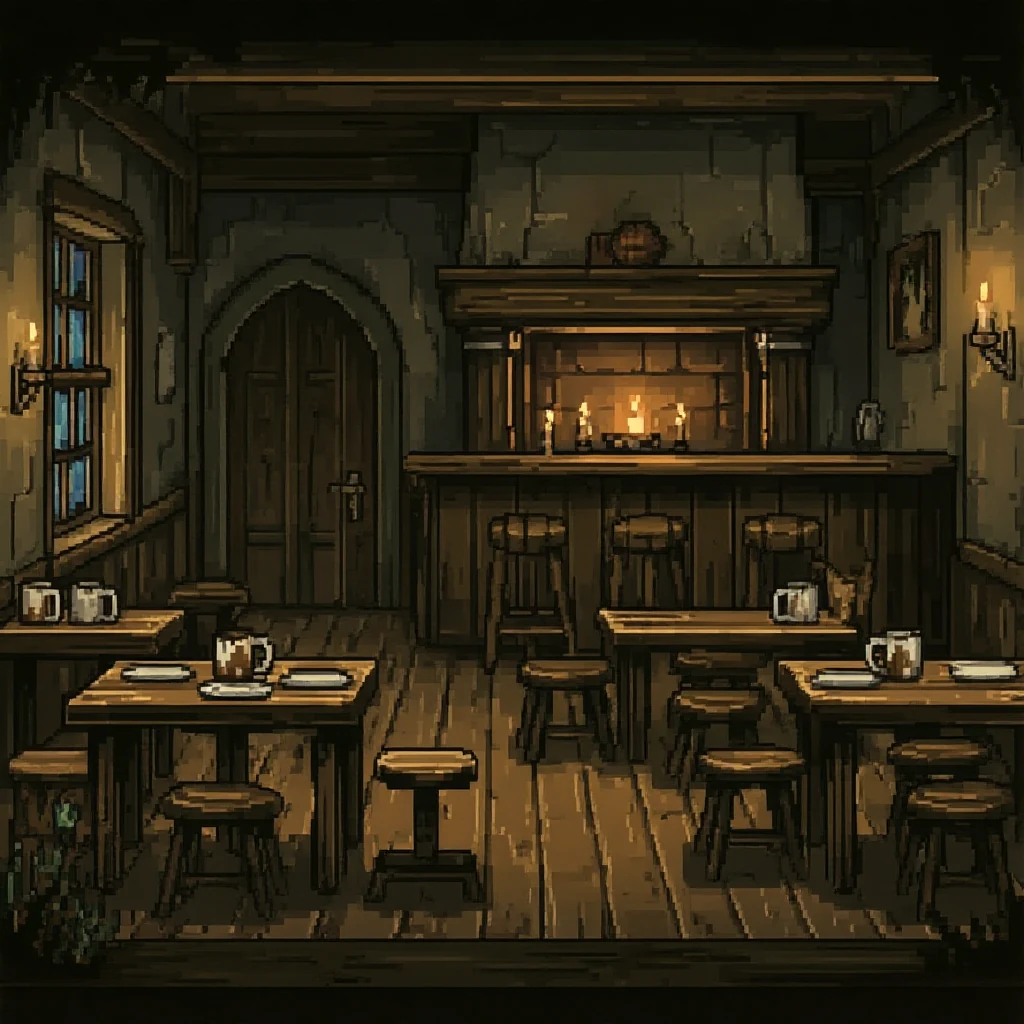
A model will happily draw a tavern with seven-fingered hands and a sign in no language. A person looks at every asset that goes into a game.
-
02
They don't assemble the game.
Scenes, pacing, what happens when you click: a person puts it together in the engine. Tools that check generated work automatically are something we're building, not something we have.
-
03
They don't decide when it's done.
Finishing means cutting things. That call is ours.
Built once, used again
Every game leaves something behind for the next.
What we generate goes into one searchable library, most of it alongside the brief that produced it, so the next game can start there instead of from nothing.
Indie games take years mostly because everything is made from scratch. We'd rather each game start further along than the last.
Thornwall and the tools that made it were built at the same time. A playable build with all three endings existed about a week after the story was written.
Disclosure
How we tell you what's generated.
Every game page carries a list of each part of the game, who or what made it, and how. Not "AI-assisted" in a footnote. Specific enough to check.
- Specific. "Backgrounds: generated on our workstation from a written brief, chosen by a person." Not "some assets may use AI".
- Beside the button. A one-line summary sits next to wherever you'd get the game, and links to the full list.
- The same everywhere. When a store asks about AI use, our answer there matches the list on this site.
- Corrected when wrong. If something on a list turns out to be inaccurate, we fix the list and say so.
We work this way so a very small studio can finish games. We'd rather you hear that from us.