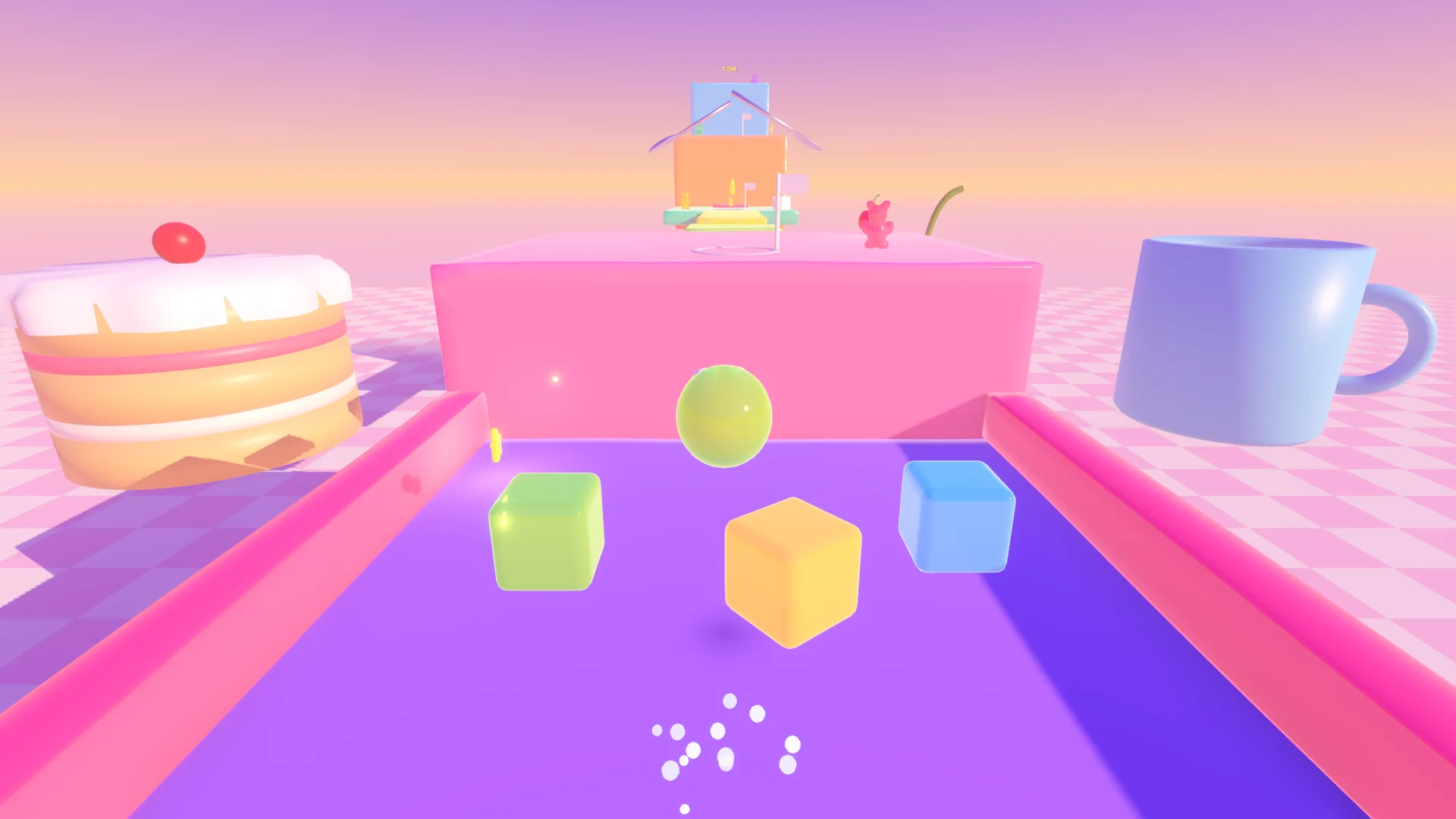
A jelly platformer · 1 to 4, on one screen or online
Blorp!
A lime jelly has escaped the dessert factory. It has no bones, so it rolls, soaks up dishwater, dries out on the hob and squeezes through fork tines to get home.
- Players
- 1 to 4
- Levels
- Seven, plus the Arcade
- Platforms
- Windows · Linux
- Engine
- Godot 4.6
- Status
- In testing
Levels and models are built by code, the sound is synthesised, the music was generated on our machine, and the code was written with AI assistance. The full list.
Blorp is with a few testers now. Testing it for us? Download it here with the password you were given.
The jelly
It moves the way jelly moves.
Blorp isn't a ball with a face. Its body is a cage of points that wants to keep its shape and can't quite manage it. It squashes when it lands, bulges when it's full of water and sags over edges.
You roll by spinning your own jelly. Hold jump and Blorp squishes down before it springs. Everything else in the kitchen wobbles too: the floor, the cubes, the walls you'll be climbing.
Between levels there's the Arcade, a room with nothing to win: a tower, a waterfall slide into a pool, a pit of jelly cubes and bounce pads.
Under Extras there's Blorp School, free: three short physics lessons you pass by doing them, alone or together.
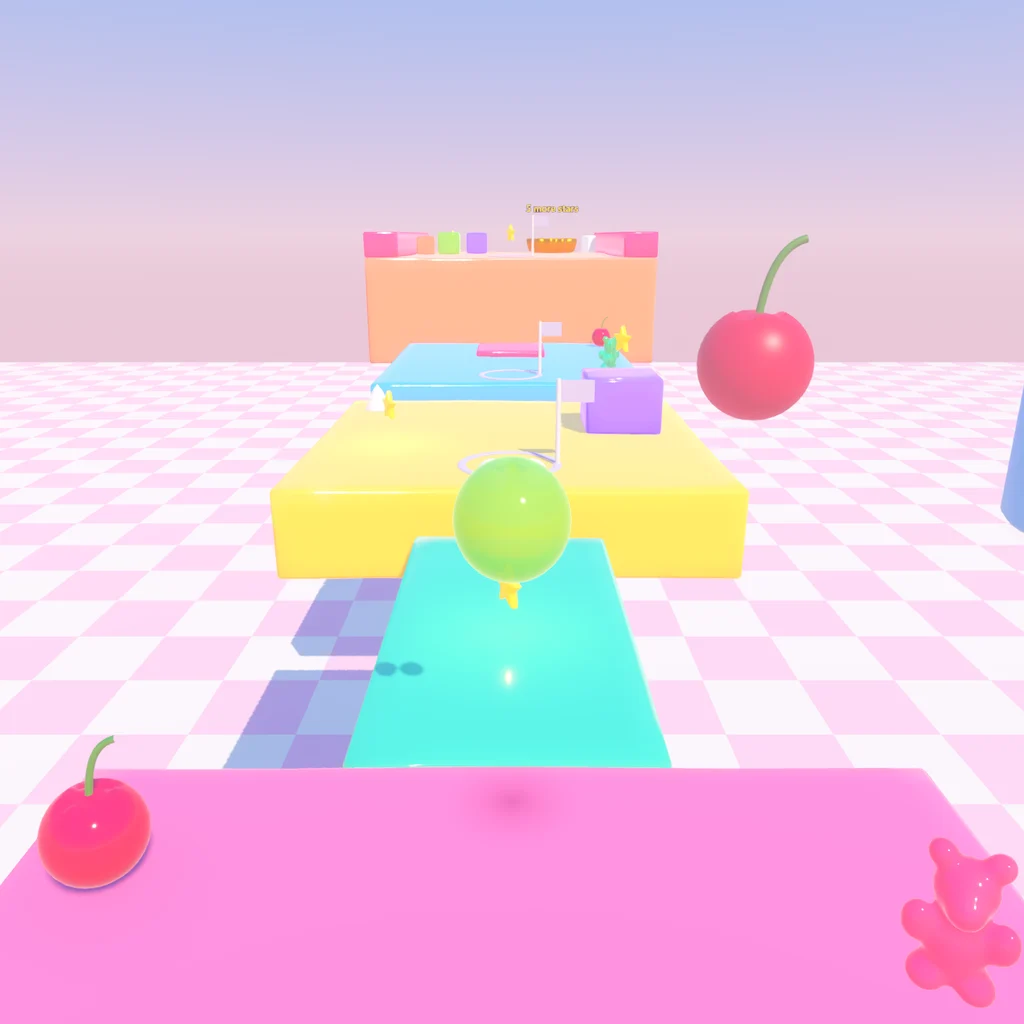
Moves
Each level teaches one more.
-
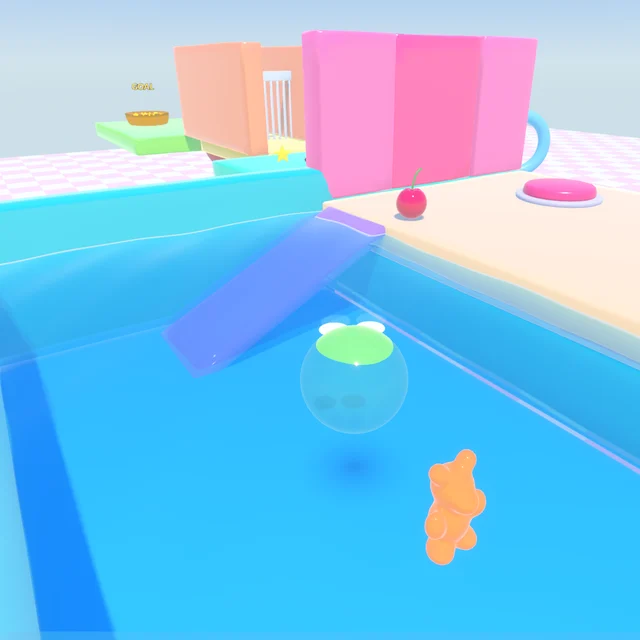
Soak
Sit in the sink. You come out heavy enough for the big buttons.
-
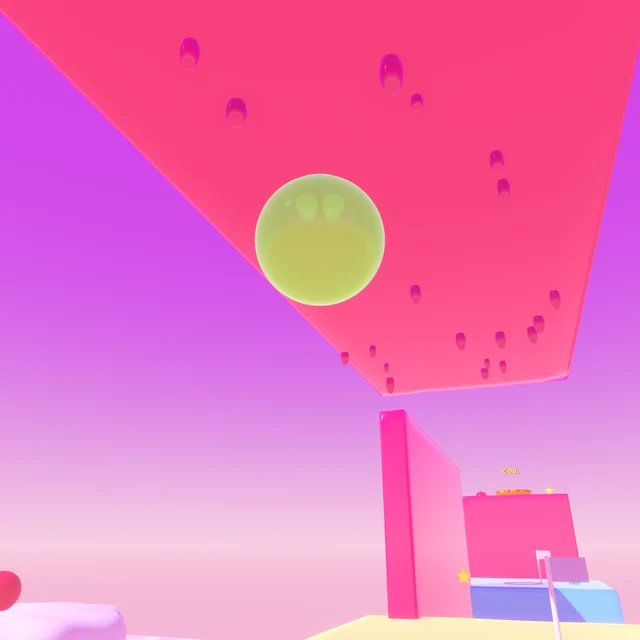
Stick
Hold on to jam. Walls, ceilings, anything sticky.
-
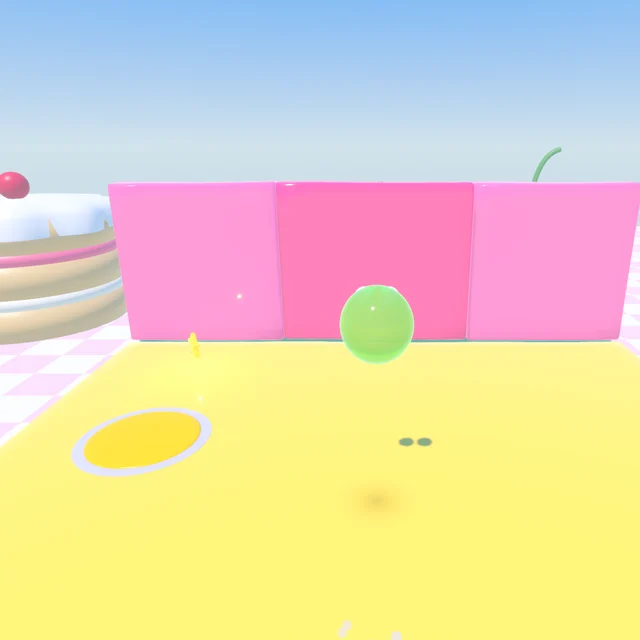
Split
Stand on a plate and split in two. One half holds it, the other goes through.
-
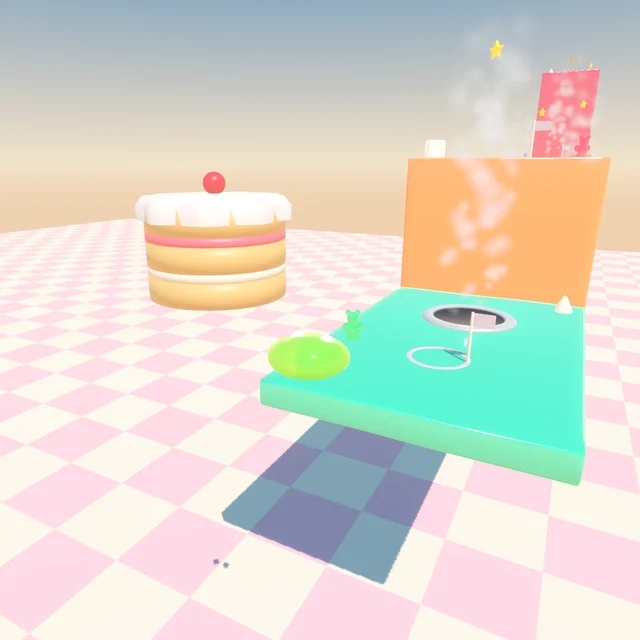
Glide
Go flat as a pancake in the air and ride the steam.
Up to four
Some doors need two blobs.
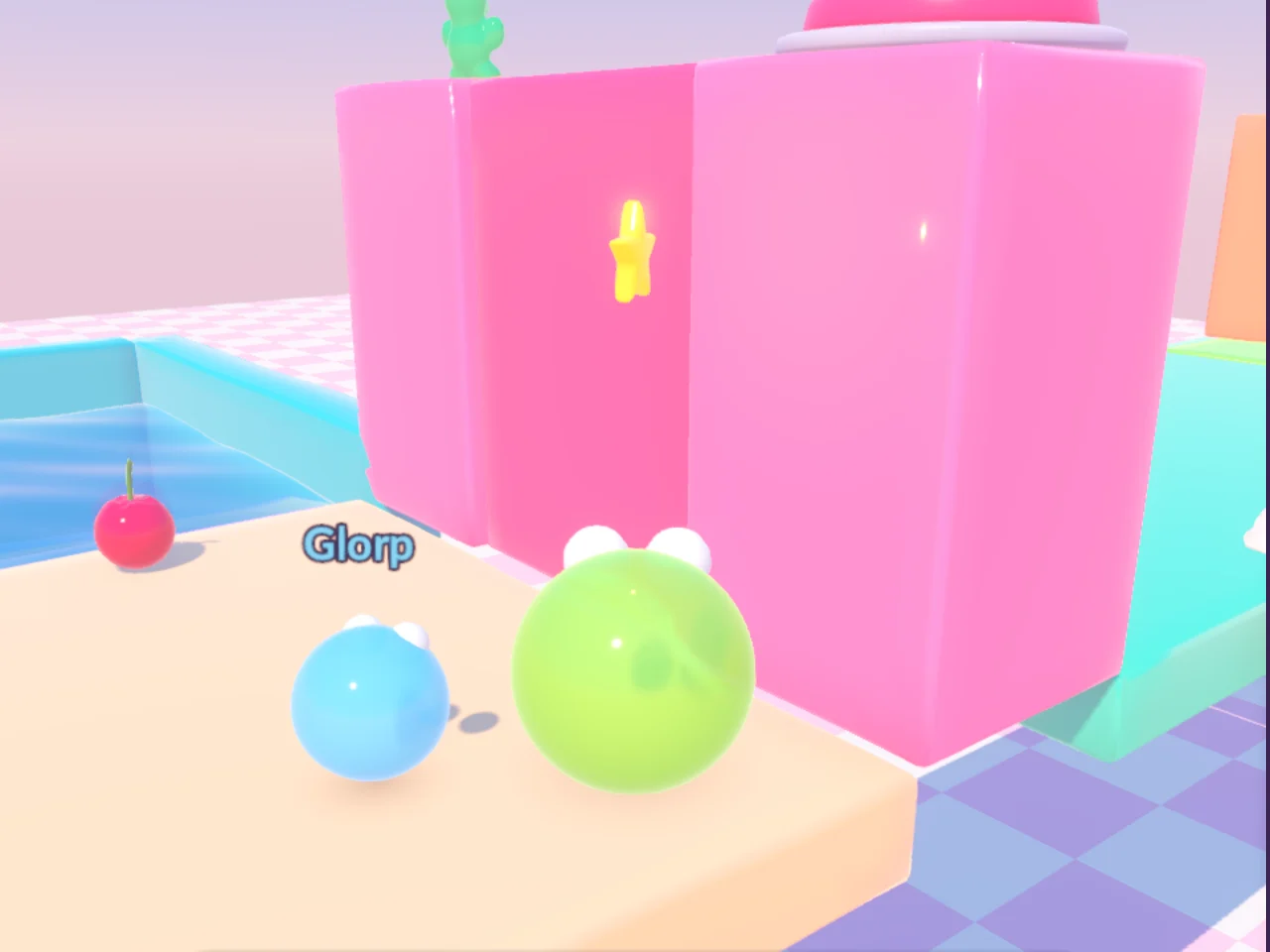
Share one screen with up to four players, or play online with one computer each. There are levels made for pairs: one of you soaks up and sits still, the other bounces off and opens the door.
The solo levels work for two as well, and most of them can be raced. Records for two are kept apart from yours.
For now, online play needs both computers on the same network, or on Tailscale.
How Blorp was made
What was generated, and what wasn't.
Every game we make gets a list like this. Why we do it.
| Part | Made by | How |
|---|---|---|
| Idea and direction | Person + model | A person set the idea, plays it and decides what ships. An AI assistant drafted the levels and mechanics. |
| Jelly physics | Person + model | Our own soft-body solver, written in GDScript with an AI coding assistant. |
| Levels and models | Person + model | Built by code in Blender. No image or 3D generator made them. |
| Sound effects | Person + model | Synthesised by code. No sound model. |
| Music | Model | Generated on our own workstation with ACE-Step. |
| Title logo | Model | Generated on our own workstation with an open-weight image model. |
| Code | Person + model | Written with an AI coding assistant, directed and reviewed by a person, in Godot 4.6. |